%20--%3e%3csvg%20version='1.1'%20id='Layer_1'%20xmlns='http://www.w3.org/2000/svg'%20xmlns:xlink='http://www.w3.org/1999/xlink'%20x='0px'%20y='0px'%20viewBox='0%200%2052.8%2052.8'%20style='enable-background:new%200%200%2052.8%2052.8;'%20xml:space='preserve'%3e%3cstyle%20type='text/css'%3e%20.st0{fill:%23D70036;}%20.st1{fill:%234B4F54;}%20%3c/style%3e%3cpath%20class='st0'%20d='M22.1,27.8L49.9,0.4C49.3,0.1,48.7,0,48,0H4.8C2.2,0,0,2.2,0,4.8V48c0,2.6,2.2,4.8,4.8,4.8h20.8v-0.1%20c2.9,0,5.5-1.4,7.4-3.6c2.1-2.3,3.4-5.4,3.4-8.5c0-3-1.2-5.7-3.2-7.6c-2-2-4.6-3.2-7.6-3.2c-0.4,0-0.8,0-1.1,0.1%20c-0.4,0-0.7,0.1-1.1,0.2l-4.6,1.1L22.1,27.8z'/%3e%3cpath%20class='st1'%20d='M51.9,2.1L26.5,27.2c3.3,0.2,6.3,1.7,8.6,3.9c2.4,2.4,3.9,5.8,3.9,9.5c0,1-0.1,2-0.3,2.9L52.8,5.4V4.8%20C52.8,3.8,52.5,2.9,51.9,2.1'/%3e%3c/svg%3e)

Preserve your document integrity
Safeguard your information and ensure document validity with secure and compliant document storage.

Certified storage for compliant business

Manage information accessibility
- Schedule transfer of appropriate documents into storage for long-term retention or preservation
- Archive documents directly from your other systems and prevent document loss
- Restrict access rights exclusively to authorized users
“Integrating business applications with document storage in InDoc EDGE enables quick yet controlled access to information when needed.”
Preserve content for long-term use
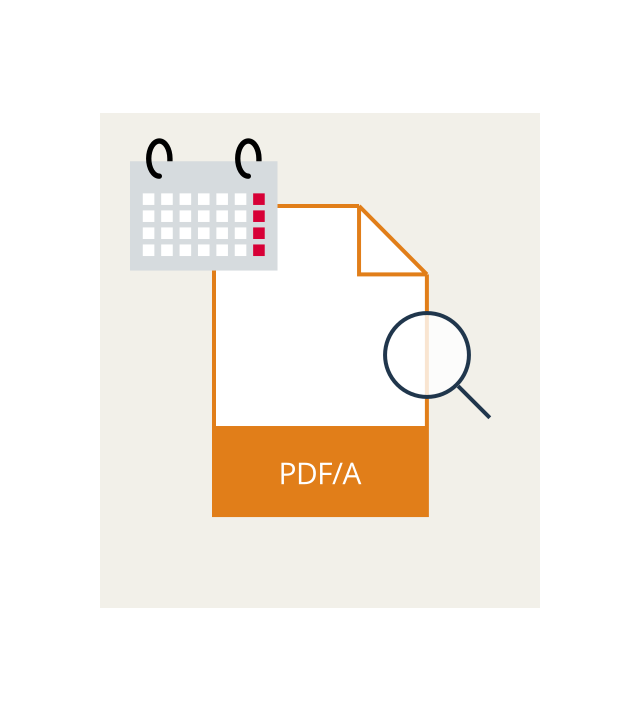
- Ensure content usability by automatic conversion to long-term storage format
- Quickly search for information by document name, content, metadata, and document type
- Effortlessly transition documents from everyday use to storage for long-term retention or preservation
is the required retention period for documents that are not classified as archival or permanent documentary material.

Retain integrity of documents in storage
- Monitor access to stored content in the audit trail
- Preserve authenticity, integrity, and unaltered content
- Ensure durability according to the core principles of secure document storage
- Timely validate the automatic list of documents with expired retention periods
Feature overview
Accessibility
Set user permissions and ensure protection of confidential information.
Integrity
Preserve the integrity and unaltered nature of document content in storage.
Durability
Comply with core principles of document storage and secure legal validity throughout retention.
Usability
Enable content usability over the long term while ensuring easy retrieval of information.
Authenticity
Documents are timestamped for preserving the authenticity of content.
Integration
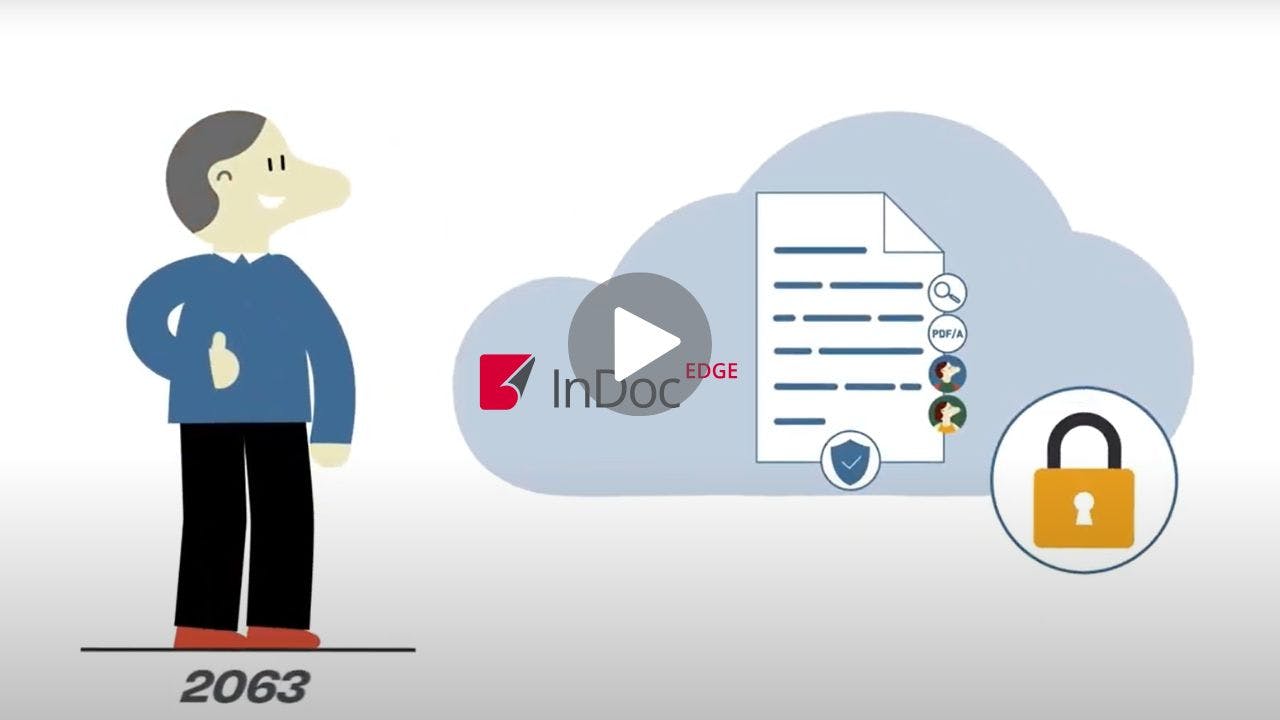
You can move documents from your business systems directly into document storage.