%20--%3e%3csvg%20version='1.1'%20id='Layer_1'%20xmlns='http://www.w3.org/2000/svg'%20xmlns:xlink='http://www.w3.org/1999/xlink'%20x='0px'%20y='0px'%20viewBox='0%200%2052.8%2052.8'%20style='enable-background:new%200%200%2052.8%2052.8;'%20xml:space='preserve'%3e%3cstyle%20type='text/css'%3e%20.st0{fill:%23D70036;}%20.st1{fill:%234B4F54;}%20%3c/style%3e%3cpath%20class='st0'%20d='M22.1,27.8L49.9,0.4C49.3,0.1,48.7,0,48,0H4.8C2.2,0,0,2.2,0,4.8V48c0,2.6,2.2,4.8,4.8,4.8h20.8v-0.1%20c2.9,0,5.5-1.4,7.4-3.6c2.1-2.3,3.4-5.4,3.4-8.5c0-3-1.2-5.7-3.2-7.6c-2-2-4.6-3.2-7.6-3.2c-0.4,0-0.8,0-1.1,0.1%20c-0.4,0-0.7,0.1-1.1,0.2l-4.6,1.1L22.1,27.8z'/%3e%3cpath%20class='st1'%20d='M51.9,2.1L26.5,27.2c3.3,0.2,6.3,1.7,8.6,3.9c2.4,2.4,3.9,5.8,3.9,9.5c0,1-0.1,2-0.3,2.9L52.8,5.4V4.8%20C52.8,3.8,52.5,2.9,51.9,2.1'/%3e%3c/svg%3e)

Unleash the power of digital to succeed
Engage clients and partners in your processes and improve CX with automated tasks and workflows.

Ahead of your competition
perfomance boost
by implementing people-centric processes.
of B2B clients
prefer digital interactions and active participation.
less internal incidents
while elevating the information security levels.
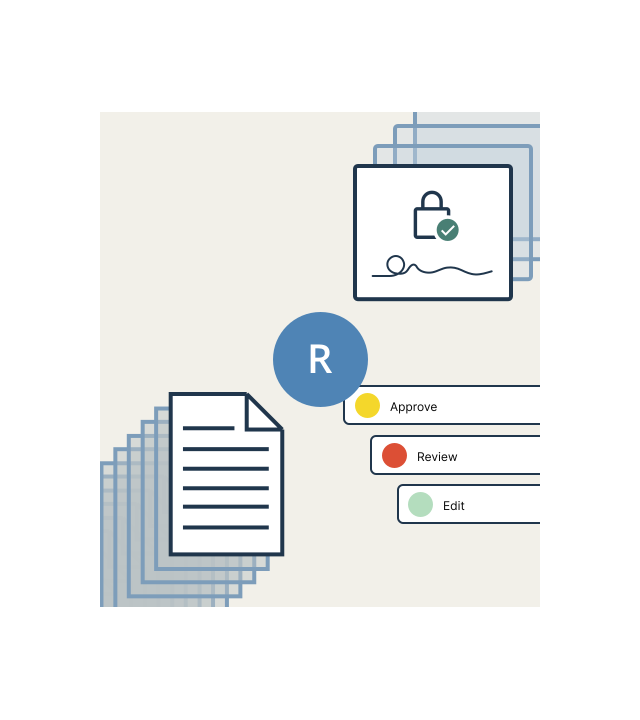
Focus on what matters most - people
- Design processes and workflows tailored to your clients, partners, and coworkers
- Include any number of participants, both your coworkers and external parties
- Continuously optimize flows to adapt to rapid changes
of organizations believe that a great customer experience is the new competitive advantage...
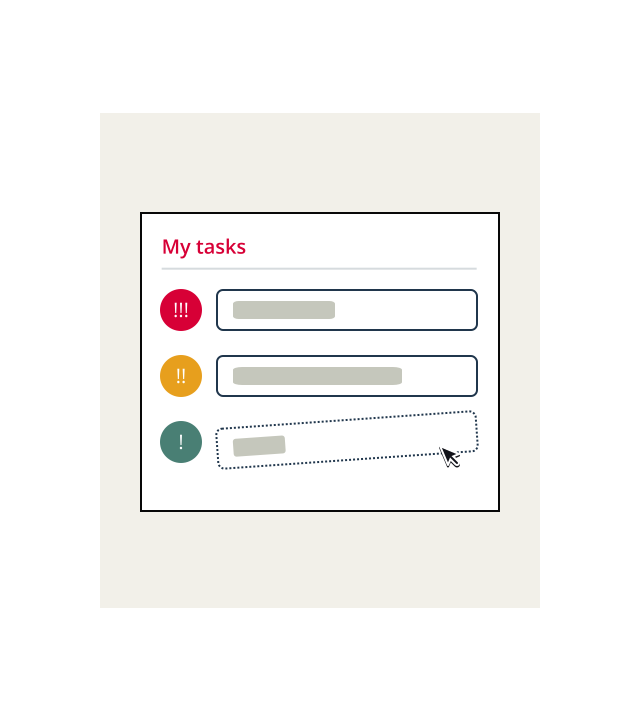
Fast-track your goals with digital tasks
- Automatically collect the necessary information
- Add business rules to automate tasks
- Overview open tasks by priority and other categories
- Improve overall quality with fewer errors
"We have optimized and digitized the key retail and corporate loan approval workflows. InDoc EDGE has enabled us to shorten the approval time, reduce the risk of error and improve the CX."
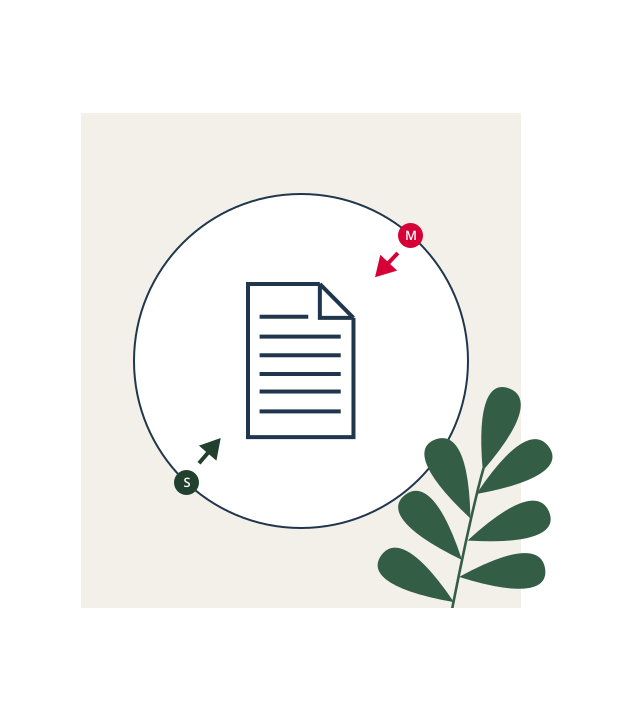
Ensure confidentiality and enable compliance
- Collaborate with peace of mind, knowing that confidential content will never leave a secure environment
- Ensure information is directed to the right recipients
- Track progress of open tasks and monitor audit trail to assess performance
Feature overview
Process design
Use BPMN 2.0 notation for no-code / low-code process design and visualization.
Business rules
Control your flows with business rules for automation and quick adaptation if needed.
Priority setting
Set appropriate priority to tasks that require timely completion and should not be overlooked.
Participant engagement
Facilitate active participation by directing tasks to coworkers and external parties.
Task notifications
Participants receive real-time task notifications through dashboard, reports, and email.
Performance monitoring
Timely identify variances from goals and optimize performance promptly if necessary.