%20--%3e%3csvg%20version='1.1'%20id='Layer_1'%20xmlns='http://www.w3.org/2000/svg'%20xmlns:xlink='http://www.w3.org/1999/xlink'%20x='0px'%20y='0px'%20viewBox='0%200%2052.8%2052.8'%20style='enable-background:new%200%200%2052.8%2052.8;'%20xml:space='preserve'%3e%3cstyle%20type='text/css'%3e%20.st0{fill:%23D70036;}%20.st1{fill:%234B4F54;}%20%3c/style%3e%3cpath%20class='st0'%20d='M22.1,27.8L49.9,0.4C49.3,0.1,48.7,0,48,0H4.8C2.2,0,0,2.2,0,4.8V48c0,2.6,2.2,4.8,4.8,4.8h20.8v-0.1%20c2.9,0,5.5-1.4,7.4-3.6c2.1-2.3,3.4-5.4,3.4-8.5c0-3-1.2-5.7-3.2-7.6c-2-2-4.6-3.2-7.6-3.2c-0.4,0-0.8,0-1.1,0.1%20c-0.4,0-0.7,0.1-1.1,0.2l-4.6,1.1L22.1,27.8z'/%3e%3cpath%20class='st1'%20d='M51.9,2.1L26.5,27.2c3.3,0.2,6.3,1.7,8.6,3.9c2.4,2.4,3.9,5.8,3.9,9.5c0,1-0.1,2-0.3,2.9L52.8,5.4V4.8%20C52.8,3.8,52.5,2.9,51.9,2.1'/%3e%3c/svg%3e)

Boost team performance with sharing
Establish a secure and compliant work environment for inclusive creation, easy collaboration, and more efficient teamwork.

Secure collaboration with anyone
version of truth
ensures all team members have up-to-date information.
large files
can be conveniently shared both internally within the organization and externally.
number of recipients
to have configurable and traceable access to shared documents and tasks.
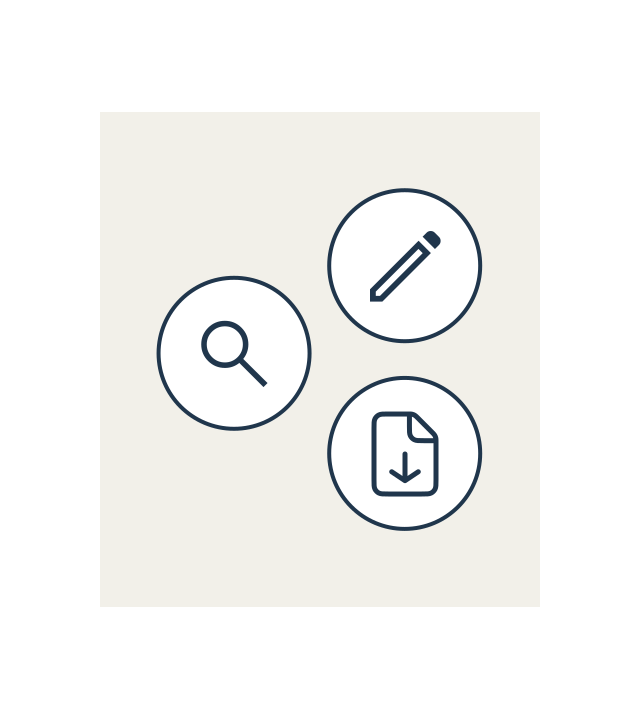
Keep control over shared files and tasks
- Set permissions for user actions, such as reading, editing, uploading, downloading, and printing content
- Add an extra layer of security with two-factor authentication (2FA) for external users
- Limit accessibility of shared content to a desired timeframe
- Track sharing with task insights and extensive audit trail
employees exchange confidential content using only conditionally secure channels...
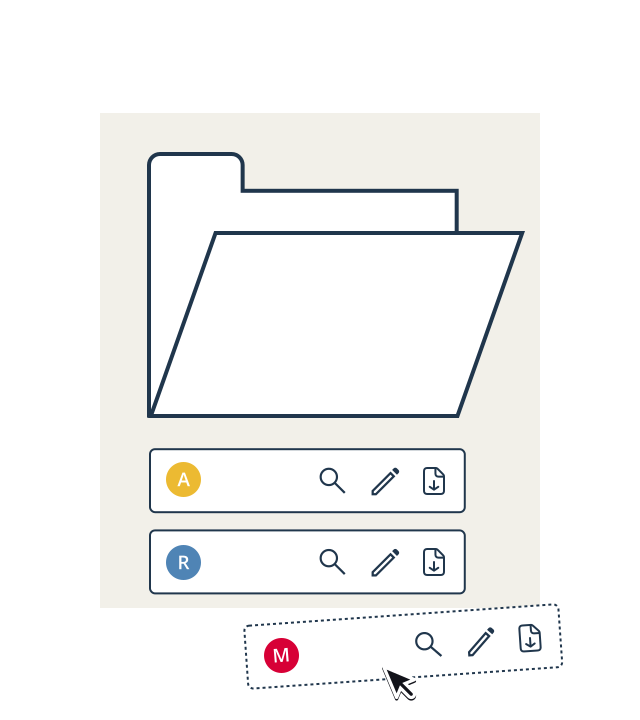
Adjust settings and update content even mid-share
- Share documents or tasks with your team, external recipients included
- Update shared content, adjust permissions, change recipients or availability anytime, even during sharing
- Maintain complete control over content sharing
"Daily tasks immediately became much easier, we're more focused on the content because we don't need to worry about document sharing anymore."
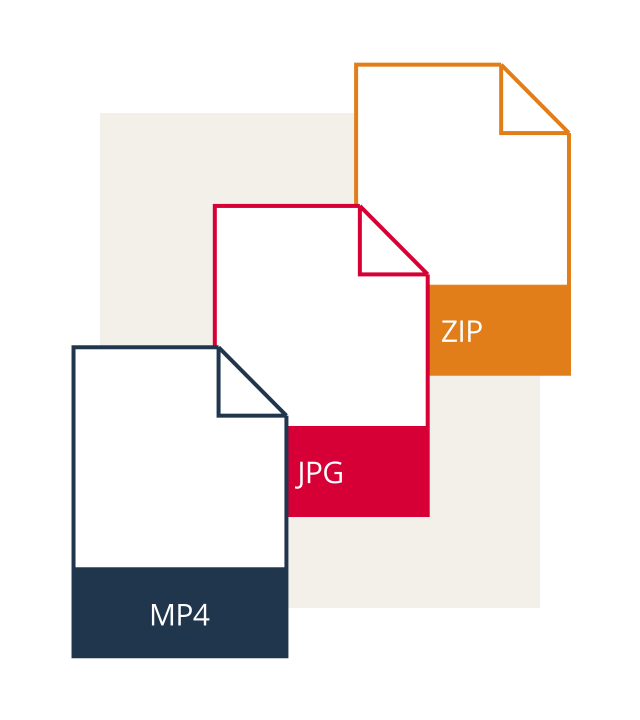
Share or request large files in different formats
- Enable the exchange of very large files, accommodating sizes of up to 50 GB per share
- Preview content in 70+ formats in InDoc EDGE, including video and audio files, without downloading
of IT decision-makers said that document sharing is one of the most important features of digital document processes and tools in supporting their organization’s business continuity and agility...
Feature overview
Various permissions
Allow for reading, editing, uploading, downloading and/or printing.
Antivirus scanning
Turn on automatic security scanning of uploaded files or new versions of already saved documents.
GDPR compliance
Prevent documents containing personal data from being left wherever or retained by whoever.
Advanced settings
Set restrictions on formats, sizes, confidentiality levels, and external recipients.
Extensive audit trail
Maintain traceability even when sharing is included in broader business processes.
ISO 9001 and ISO 27001
Commitment to quality and ensuring a high level of information security.