%20--%3e%3csvg%20version='1.1'%20id='Layer_1'%20xmlns='http://www.w3.org/2000/svg'%20xmlns:xlink='http://www.w3.org/1999/xlink'%20x='0px'%20y='0px'%20viewBox='0%200%2052.8%2052.8'%20style='enable-background:new%200%200%2052.8%2052.8;'%20xml:space='preserve'%3e%3cstyle%20type='text/css'%3e%20.st0{fill:%23D70036;}%20.st1{fill:%234B4F54;}%20%3c/style%3e%3cpath%20class='st0'%20d='M22.1,27.8L49.9,0.4C49.3,0.1,48.7,0,48,0H4.8C2.2,0,0,2.2,0,4.8V48c0,2.6,2.2,4.8,4.8,4.8h20.8v-0.1%20c2.9,0,5.5-1.4,7.4-3.6c2.1-2.3,3.4-5.4,3.4-8.5c0-3-1.2-5.7-3.2-7.6c-2-2-4.6-3.2-7.6-3.2c-0.4,0-0.8,0-1.1,0.1%20c-0.4,0-0.7,0.1-1.1,0.2l-4.6,1.1L22.1,27.8z'/%3e%3cpath%20class='st1'%20d='M51.9,2.1L26.5,27.2c3.3,0.2,6.3,1.7,8.6,3.9c2.4,2.4,3.9,5.8,3.9,9.5c0,1-0.1,2-0.3,2.9L52.8,5.4V4.8%20C52.8,3.8,52.5,2.9,51.9,2.1'/%3e%3c/svg%3e)

Complete your digital business story
Enhance the digital experience for your coworkers, clients, and partners with efficient and legally compliant e-signing.

Agree anywhere and anytime
faster
to close deals with clients.
in average
save per agreement...
legally compliant
electronic signing.
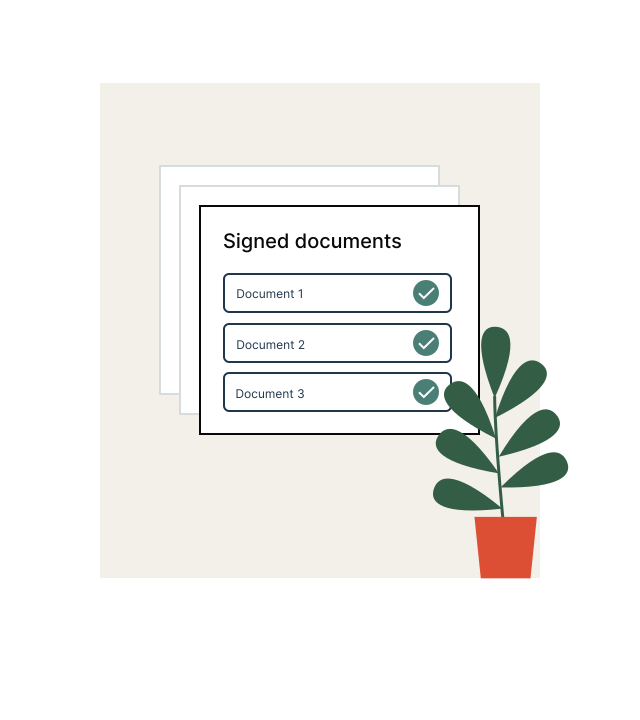
Finalize agreements quickly and efficiently
- Send documents to any signatories at once
- Adjust their order to better comply with specifics and rules
- Sign multiple documents simultaneously
- Monitor signing with task insights and extensive audit trail
“With e-signing, we have cut the time needed to become a fund investor by two thirds, thereby allowing our consultants to dedicate even more time to attending the needs of clients.”
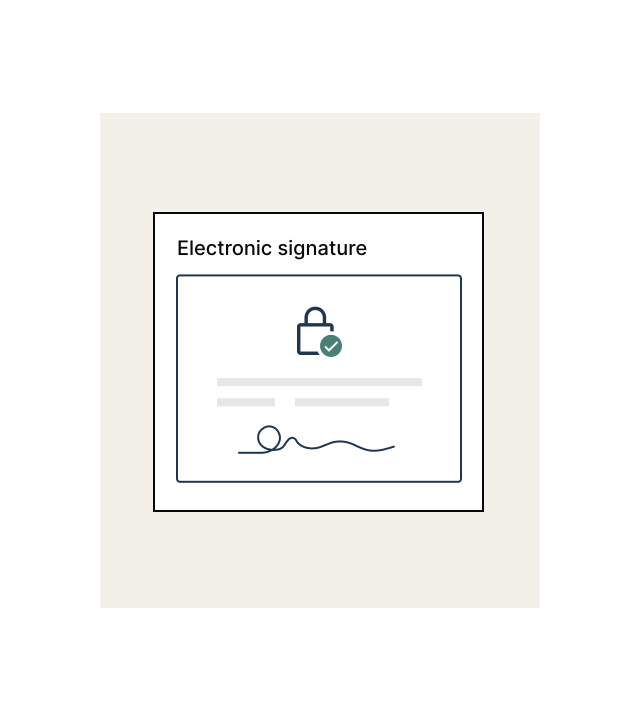
Improve your CX with user-friendly signing
- Embed e-signing into broader business processes
- Include all necessary internal and external signatories
- Obtain any signatures, within and outside your organization
- Increase your contracting process completion success rate
of clients prefer digital business when e-signatures are utilized...
of signatories agree that e-signatures are more secure than hand-written or wet signatures...
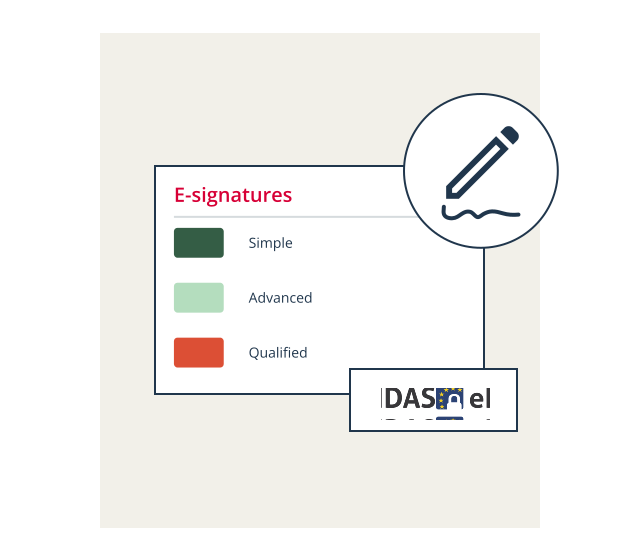
Ensure compliance in digital business
- In accordance with eIDAS, you can choose between simple, advanced, and qualified electronic signatures
- Utilize the automatic adjustment of available signature methods based on the selected signature type
- Share documents confidentially with all signatories
- Store signed documents with audit trail in certified document storage
Feature overview
All types of e-signatures
Choose between eIDAS compliant simple, advanced, and qualified e-signatures.
Two-factor authentication
Verify external signatory's identity and safeguard sensitive information with 2FA login.
Extensive audit trail
Monitor performance and changes with comprehensive audit trail and task insights.
Various signature methods
Choose the most suitable signature method from simple click-to-sign to qualified trust service.
Integrity protection
Prevent undetected subsequent changes to the content of signed documents.
Integration
Ensure seamless signing in your applications via APIs or embed signing into broader business processes.