%20--%3e%3csvg%20version='1.1'%20id='Layer_1'%20xmlns='http://www.w3.org/2000/svg'%20xmlns:xlink='http://www.w3.org/1999/xlink'%20x='0px'%20y='0px'%20viewBox='0%200%2052.8%2052.8'%20style='enable-background:new%200%200%2052.8%2052.8;'%20xml:space='preserve'%3e%3cstyle%20type='text/css'%3e%20.st0{fill:%23D70036;}%20.st1{fill:%234B4F54;}%20%3c/style%3e%3cpath%20class='st0'%20d='M22.1,27.8L49.9,0.4C49.3,0.1,48.7,0,48,0H4.8C2.2,0,0,2.2,0,4.8V48c0,2.6,2.2,4.8,4.8,4.8h20.8v-0.1%20c2.9,0,5.5-1.4,7.4-3.6c2.1-2.3,3.4-5.4,3.4-8.5c0-3-1.2-5.7-3.2-7.6c-2-2-4.6-3.2-7.6-3.2c-0.4,0-0.8,0-1.1,0.1%20c-0.4,0-0.7,0.1-1.1,0.2l-4.6,1.1L22.1,27.8z'/%3e%3cpath%20class='st1'%20d='M51.9,2.1L26.5,27.2c3.3,0.2,6.3,1.7,8.6,3.9c2.4,2.4,3.9,5.8,3.9,9.5c0,1-0.1,2-0.3,2.9L52.8,5.4V4.8%20C52.8,3.8,52.5,2.9,51.9,2.1'/%3e%3c/svg%3e)

What Is a Document Management System?
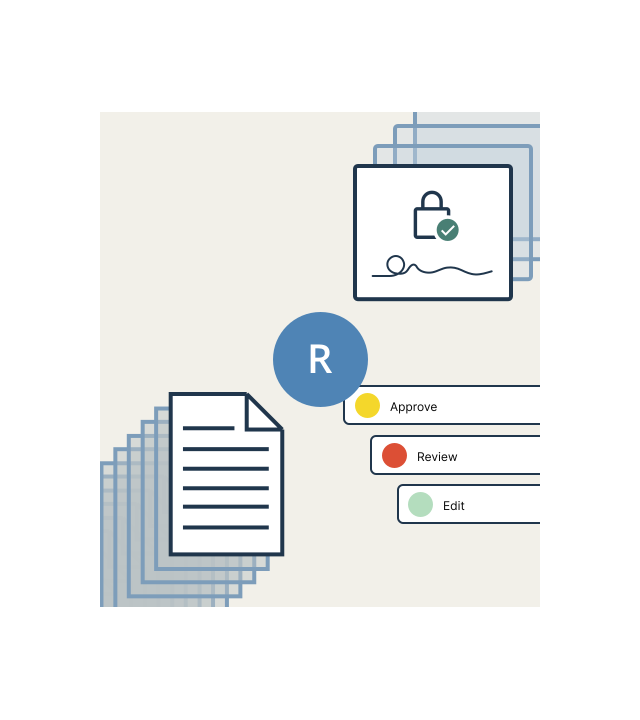
A document management system (DMS) is a software solution for the structured management of documents and related business processes.
It ensures control, traceability, and secure, compliant document storage throughout the entire document lifecycle.
When Document Management Is Not Systematically Managed
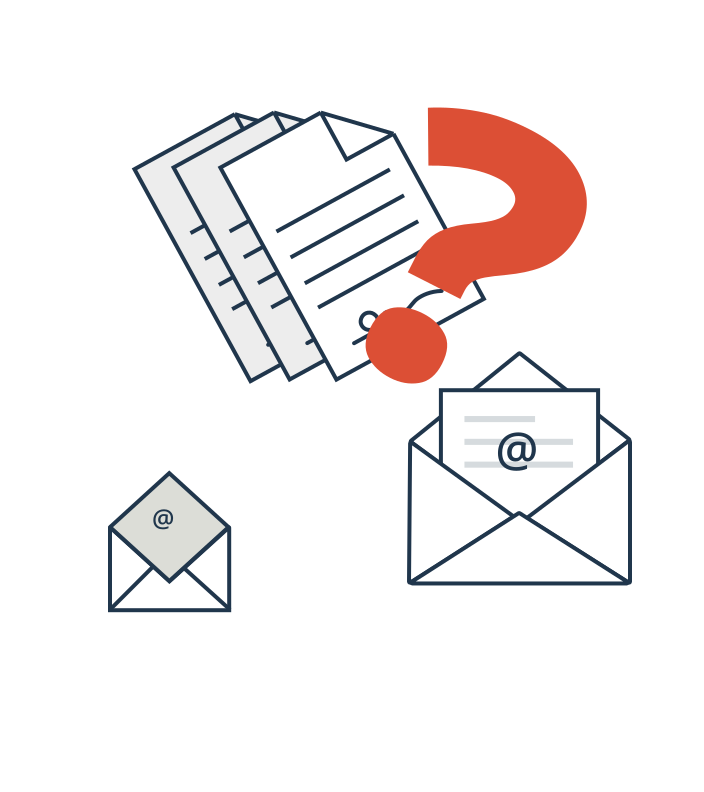
Documents are created and circulated throughout the organization, but without centralized control.
- Information is scattered across multiple systems.
- Changes are not always clearly traceable.
- Processes are not consistently connected to documentation.
- Responsibilities are not defined consistently.
In such an environment, transparency decreases and operational risk increases.
This is why document management must be organized systematically.
Key Features of a Document Management System
Document Capture
Document capture is the process of transferring paper and electronic documents into a document management system through scanning, email import, or integration with business applications. Once captured, documents are subject to defined access control and traceability rules.
Document Organization and Search
Document organization is based on classification and metadata assigned to each document during capture. Searching by content, document type, date, or responsible person retrieves the right document within seconds, regardless of where it was created.
Version Control
Version control ensures that a single, up-to-date version of each document is always available, while previous versions remain accessible for review. This prevents outdated documents from circulating and reduces the risk of incorrect decisions based on obsolete information.
Audit Trail and Traceability
An audit trail records every activity performed on a document: who opened, modified, approved, or deleted it, and when. It is built into the document management system and cannot be bypassed, enabling organizations to demonstrate compliance during an audit.
E-signing
Electronic signing enable legally valid electronic document signing in accordance with eIDAS and ZEPEP. They are integrated into the approval process, so the document remains within a controlled environment from preparation to signature.
Integrations with Business Systems
Integrations connect the document management system with ERP, CRM, HRM, and other business systems, allowing documents to be created and approved where the work takes place, without duplicate data entry.
Business Process Management and Approvals
Business process management ensures that document review and approval follow predefined rules. Every approval is recorded, and it is always clear who is responsible for the next step and when the process has been completed.
Access Control and Information Security
Access control defines who can view, edit, or approve a document at the level of an individual, role, or department. Sensitive documents are visible only to authorized users who need them, supporting compliance with the GDPR and applicable data protection laws.
Legally Compliant Electronic Archiving
Electronic archiving is the long-term preservation of documents in a way that maintains their legal validity, authenticity, and integrity. For contracts, HR records, and financial documents, it is a legal requirement in many regulated industries.

Types of Document Management Systems
Document management systems differ in where they operate and in the level of control they provide.
- Cloud document management system
A cloud document management system operates in the provider’s data center, where the provider ensures system availability, security, and updates. The organization accesses the system online from any device without maintaining its own infrastructure, enabling faster implementation and continuous system updates.
- File-sharing tool or document management system
File-sharing tools enable users to share documents but do not provide control over the entire document lifecycle. A document management system includes a built-in audit trail, access control, and certified electronic archiving, enabling organizations to demonstrate compliance during an audit.
Document Management and Regulatory Compliance
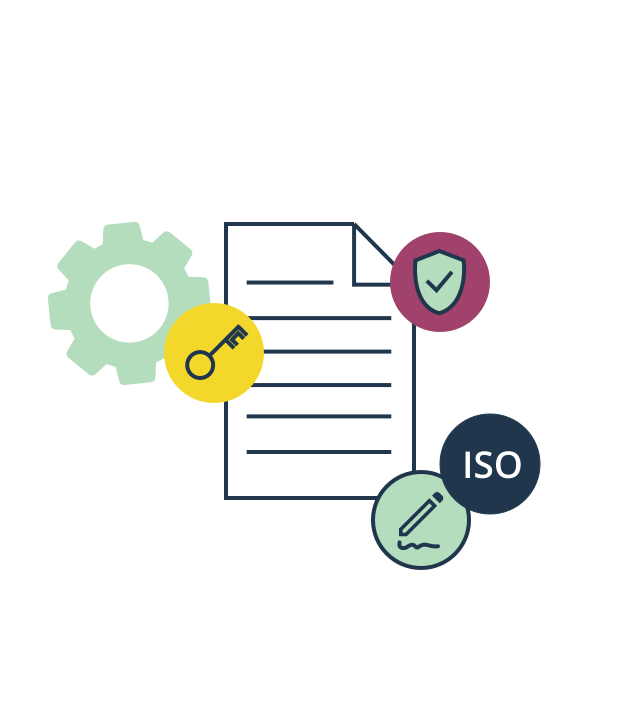
Document management and retention are governed by data protection, electronic transactions, records retention, and industry-specific regulatory requirements. The GDPR regulates the protection of personal data, while eIDAS provides the European framework for electronic identification, electronic signatures, and trust services. In banking and financial services, these requirements are complemented by EBA guidelines and DORA.
A document management system supports compliance systematically through access control, audit trails, retention rules, and documented processes, rather than relying on the consistency of individual users.

Document Management System for Regulated Industries
- Banking and financial services
Banks must be able to demonstrate who approved a contract or internal policy during every audit, in line with EBA guidelines and DORA. A document management system records every approval and keeps the audit trail ready for review without manual evidence collection.
- Healthcare
Healthcare organizations manage sensitive personal and health data subject to strict access and retention requirements. A document management system provides access control and traceability of every interaction, supporting compliance with the GDPR and applicable healthcare regulations.
- Public sector
Public institutions must retain documents in accordance with applicable records management and archival requirements. A document management system with compliant electronic archiving preserves the authenticity, integrity, accessibility, and evidential value of records throughout the required retention period.
- Manufacturing and logistics
Manufacturing and logistics companies manage documentation across multiple locations. A document management system ensures access to the current approved version at every site and provides complete traceability of changes for quality management and ISO audits.

Business Value of a Document Management System
The value of a document management system is measured in reduced risk and demonstrable compliance:
- Lower risk: the system prevents unauthorized access and untraceable changes.
- Control: management knows where each document is in the process and who is responsible.
- Demonstrable compliance: the audit trail provides continuous, automatic evidence of compliance.
- Faster processes: approvals are reduced from days to hours.
How InDoc EDGE Delivers Control, Traceability, and Compliance
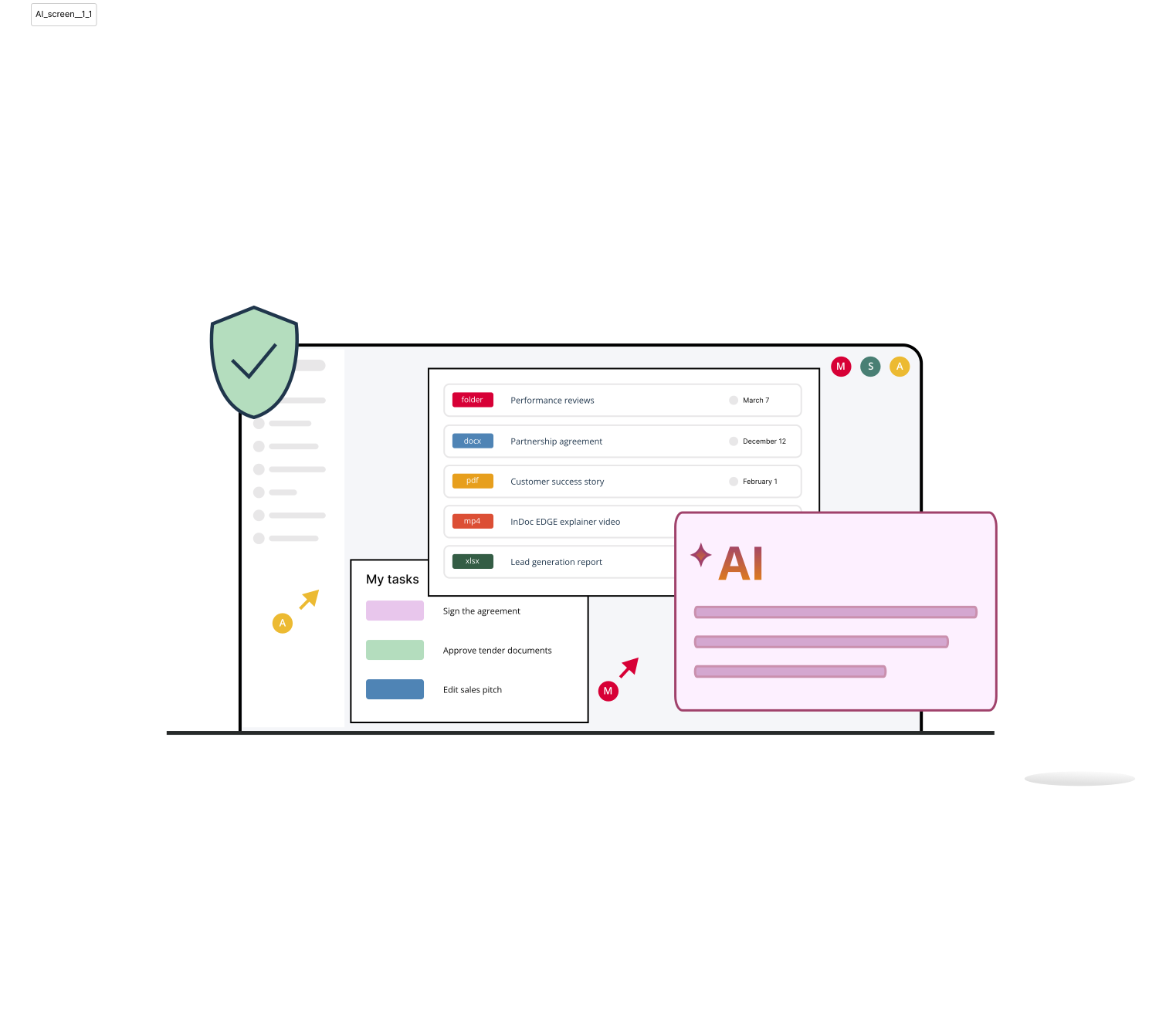
InDoc EDGE is a cloud-based document management system (DMS) designed for organizations operating in regulated environments. Control, traceability, and compliance are built into every step of document and business process management - from capture and approval to electronic signatures and compliant long-term electronic archiving.
InDoc EDGE is developed by Mikrocop, a European IT company with decades of experience in document management, business process management, and electronic archiving. Trust is supported by ISO/IEC 27001:2022 and ISO 9001:2015 certifications, a private data center, and organizations such as NLB, OTP Bank, University Medical Centre Ljubljana, Port of Koper, and Atlantic Grupa.
Discover InDoc EDGE